Drinking well water offers benefits that go beyond simple hydration. Many Raleigh homeowners appreciate its…
Testing well water begins with having a certified drinking-water laboratory or professional well testing company, such as A&T Well and Pump who performs well water testing in the Triangle area, to collect a sample of your home’s water. Annual testing looks for traces of bacteria, nitrates, pH, and total dissolved solids. Noticing changes in taste, odor, color, or if you've had recent well repairs or flooding, it's a good idea to test sooner.
How to Test Your Residential Well Water in Raleigh
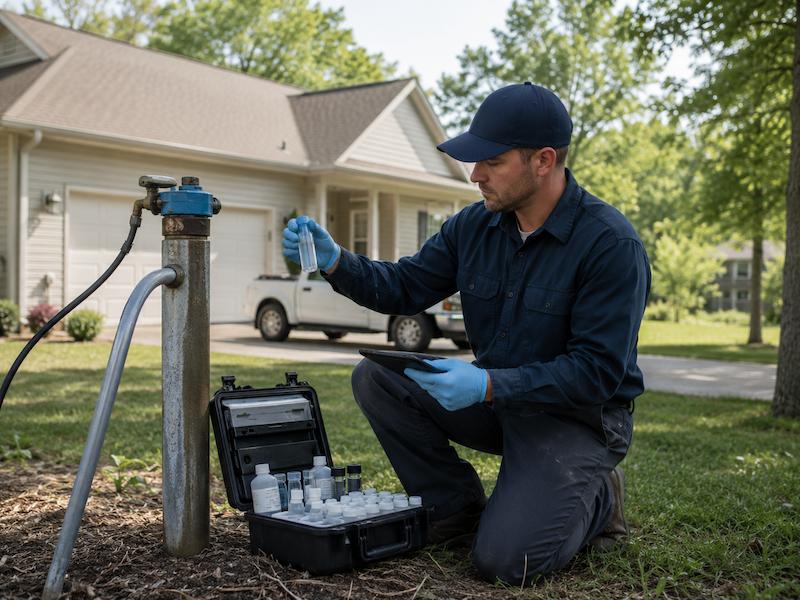
Private well water comes directly from the ground beneath your property, so its quality can change without an obvious warning.
Instances of heavy rain, nearby construction, aging well components, septic concerns, and naturally occurring minerals can all affect what reaches your home’s water supply. Your water may still look clear and taste normal when bacteria, nitrates, or certain metals are present.
Routine well water testing provides a record of your well’s condition, helps determine whether a concern is related to the water source or equipment, and makes it easier to choose the right next step when results warrant attention.
1. Start With a Certified Laboratory Test
An at-home well water testing kit can be a helpful early screening method for basic concerns, but laboratory testing offers the detailed, documented information needed to make decisions about how to treat your drinking water.
A lab will provide the right containers, collection instructions, and reporting for the tests you order. Be sure to keep your well water test reports in one place, so it’s easy to compare results over time. This is particularly useful after a well pump repair, a new filter installation, or after a storm or noticeable change in the water’s taste or appearance.
2. Choose the Right Well Water Test Panel
Your water test should cover the core concerns for private wells and any conditions that apply to your property. A testing provider, local health department, or Raleigh well service professional can help match the panel to why you are testing.
Start With Annual Core Screening
Annual well water testing commonly includes results for any trace of coliform bacteria and E. coli, nitrate or nitrate/nitrite, pH, and total dissolved solids. The results may reveal signs of surface water, septic conditions, mineral content, or plumbing conditions that need a closer look.
North Carolina’s Department of Health and Human Services recommends testing private well water every year for total and fecal coliform bacteria and every two years for heavy metals and nitrates. Additional testing for concerns such as lead, copper, pesticides, or volatile organic compounds may be appropriate based on local conditions, nearby activities, and changes in water quality.
3. Collect a Well Water Sample
A reliable result starts with a reliable sample. Order the test first, then follow the laboratory’s instructions exactly. Each test can have its own container, preservation requirements, and deadline for getting the sample back to the laboratory.
Choose the Right Sampling Point
Tell the laboratory or testing professional whether you are testing as part of annual maintenance, a property sale, post-repair testing, or a response to a water problem like cloudy well water. They can tell you whether the sample should represent the water your family drinks, the water before a treatment system, or both.
Follow the Collection Directions
Use only the container supplied for the test. The instructions may cover the faucet to use, whether to remove the aerator, how long to run the water, and how to clean the faucet before sampling. Bacteria bottles can contain a preservative, so do not rinse them.
Avoid touching the inside of the bottle or cap. Fill it only as directed, close it promptly, and label it right away. Plan around the laboratory’s receiving hours because bacteria and other samples can have short holding times.
4. Understand the Results Before Choosing a Solution
A laboratory report for private well water should list the substances tested, your measured result, the units used, and include a comparison value.
Positive Bacteria Results Need Follow-Up
Total coliform testing can indicate whether you have contaminated well water. Traces of E. coli or fecal coliform needs especially prompt attention to remove contaminants from your water supply. If your test comes back positive for this, use an alternative drinking and cooking water source, then contact the laboratory, local health department, or a qualified well professional.
The next step may include having a professional well technician inspect the cap and wellhead, look for drainage or damaged components, sanitize the well, and retest the well water after the recommended interventions.
Nitrate, Metals, and Mineral Results Tell Different Stories
Nitrate testing is particularly important for homes with an infant or a pregnancy. If a result is elevated, do not assume boiling water will correct the issue. Follow the laboratory or health department’s guidance about safe water use.
Iron, manganese, hardness, low pH, and total dissolved solids can affect taste, staining, fixtures, appliances, and plumbing. Results such as lead or arsenic call for a more specific evaluation. The right response depends on the contaminant and concentration, not simply on choosing the most aggressive water filtration solution available.
5. Implement the Right Solution and Retest
Once you understand the test results, the next step is to address the specific issue identified. The right solution depends on what was found, where the concern may be coming from, and whether it affects the well itself, the plumbing, or the water entering the home.

A Raleigh well inspection will help determine whether the problem is connected to a damaged well cap, surface drainage, aging equipment, sediment, mineral content, or another condition that needs attention. This prevents homeowners from investing in a filtration or treatment system that does not address the source of the problem.
Match the Solution to the Water Quality Concern
- Bacteria findings may call for well sanitizing, well repairs to the well cap or casing, improved drainage around the wellhead, or a closer review of nearby septic and surface-water conditions.
- Repeated bacteria results often require more than a one-time chlorination treatment.
- High iron, manganese, hardness, or sulfur-related odor can often be addressed with a properly selected water filtration or conditioning system.
- Low pH may require treatment that helps reduce corrosive conditions in plumbing.
- Sediment may point to the need for filtration, equipment service, or a closer review of the well system.
Retest After Repairs or Treatment
Retesting confirms whether residential well repairs, sanitizing services, or installing a new treatment system is working. It is particularly important after a positive bacteria result, well repair, flood event, or any change made to correct a water-quality concern.
How to Test Well Water FAQs
How often should I test my well water?
Test annually for core private-well indicators and sooner after flooding, repairs, a noticeable water change, nearby land disturbance, or a change in the household, such as a pregnancy or an infant moving in.
Is clear well water safe to drink?
Not necessarily. Some contaminants have no smell, taste, or color. Clear water is not a substitute for routine laboratory testing.
Should I sample before or after my filter or softener?
It depends on the question. A tap sample can show the water your household drinks, while a pre-treatment sample can help diagnose water entering the treatment equipment. Ask the well professional whether you need one sample or both.
What should I do if a result is not normal?
Keep the report, use a safer drinking-water source for the time being, and ask what follow-up test or service is appropriate. A targeted solution is more likely to address the actual issue than treatment chosen from an odor or a single generic recommendation.
Schedule a Professional Well Water Test in Raleigh
A&T Well and Pump provides professional well water testing to determine the best solution to keep your home’s water supply safe and healthy. We serve local propertis in Raleigh, Cary, Apex, Wake Forest, Garner, Clayton, and nearby Central North Carolina communities with reliable well water testing, well repairs, and well pump repairs.
Call our team today at (919) 980-0981 to schedule private water well testing or a well inspection to find the source of your water issues.