Ozone water treatment systems offer a safe way to get rid of iron, bacteria, and…
A residential well gives you an independent water supply, but unlike a municipal system, much of the responsibility for monitoring the equipment and water quality falls on the homeowner. You don’t need to become an expert, but you should know where the main well components are, what warning signs to watch for, and who to call when something changes.
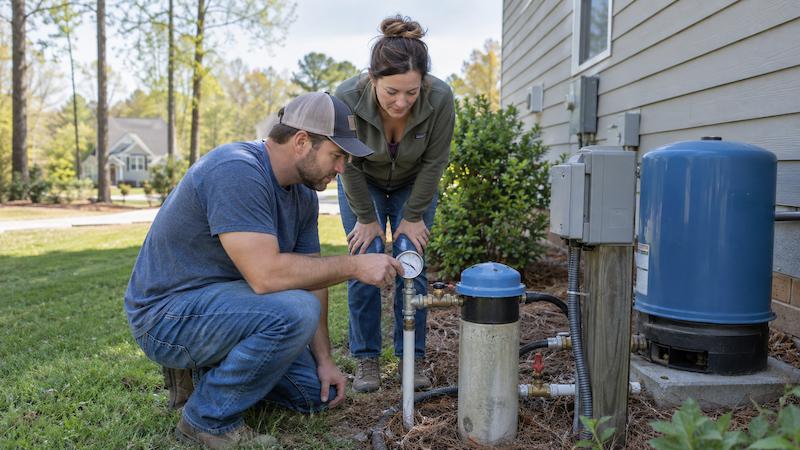
A&T Well and Pump is a Raleigh-area residential well contractor helping local homeowners inspect, maintain, repair, and understand their water well systems.
After moving into a new home with a residential well, start by identifying the system components, checking its condition, testing the water, and learning what normal water pressure and pump operation feel like.
Table of Contents
1. What Should You Learn About Your Residential Well First?
Before worrying about maintenance schedules or potential repairs, get familiar with the well system already serving the property. A few basic details can make future troubleshooting much easier.
Identify the Type of Well on the Property
Many North Carolina homes use either a drilled well or a bored well. Construction methods, depth, casing, and exposure to surface contamination can differ between well types. If your closing paperwork doesn’t identify the well type, look for a well construction record or ask a well digging contractor to evaluate the system.
Look for the Well Construction Record and Previous Service Information
Well records can tell you much more than simply when the system was installed. A North Carolina residential well construction record usually includes the well’s depth, casing information, water zones, yield, construction date, and contractor certification information.
Keep any well records, well water testing results, invoices, pump replacement information, and treatment-system documentation together. Those records give a well contractor useful history if the system develops a problem several years from now.
Locate the Wellhead and Confirm Accessibility
Find the wellhead outside the home. It should be visible, securely capped, and positioned so that surface runoff does not collect around it. Avoid burying the wellhead beneath mulch, shrubs, sheds, or other landscaping.
A certified well contractor needs clear access for video well inspections, well repairs, and 24/7 emergency well services.
Find the Well Pump, Pressure Tank, and Electrical Controls
Your water well pump may be installed down inside the well, while the pressure tank is commonly located inside the home, crawlspace, basement, garage, or separate well house.
Learn where the pressure tank and electrical controls are located, but leave electrical diagnosis or pump servicing to a professional. Knowing where the equipment is located is mainly about recognizing changes. A new clicking sound, visible leak, rapid cycling, or sudden pressure loss is easier to report when you already know where the system components are.
2. How Soon Should You Test Your Residential Well Water?

Arrange water quality testing soon after moving in, even if testing was completed as part of the home sale. Water can look clear and taste normal while still containing contaminants that cannot be detected without laboratory testing. A real estate transaction may also have included only a limited group of tests.
The United States Center for Disease Control (CDC) recommends testing private well water annually for total coliform bacteria, nitrates, total dissolved solids, and pH. Testing for other contaminants should reflect conditions in your area, nearby land use, household circumstances, and changes in the water itself.
For Raleigh-area homeowners, a broader baseline evaluation may also look at characteristics such as hardness, iron, manganese, or other common contaminants found in North Carolina groundwater.
Test Again When Something Changes
Don’t wait for the next annual test if the well has experienced a significant change. Additional water well testing should be done after flooding, land disturbance near the well, repairs to the well system, or noticeable changes in water taste, color, or smell.
3. What Should You Inspect Around the Residential Well?
Once you know where the system is located, walk the area around the wellhead. You’re looking for conditions that could allow runoff into the well or point to deterioration of exposed components.
A video well inspection can provide a closer look inside the well when there is reason to suspect casing damage, sediment, obstruction, or another condition that cannot be evaluated from the surface.
Check Drainage Around the Well
The ground around the well should slope away from the wellhead to prevent rainwater from pooling. Standing water can carry contaminants directly into the well if seals are compromised. Good drainage reduces the risk of bacterial contamination.
Check the Distance From Potential Contamination Sources
Septic systems, animal areas, fuel or chemical storage, waste areas, and similar sources should not be located too close to the well. North Carolina well construction rules establish separation requirements between water supply wells and potential sources of groundwater contamination.
You may not know the exact measurements on a property you just purchased. A professional inspection from a licensed Raleigh well contractor can help identify conditions that warrant closer review.
Look for Visible Wear or Damage
Walk around the wellhead and look for an unsecured or damaged cap, damaged casing, loose components, exposed wiring, or evidence that vehicles or lawn equipment have struck the well.
The EPA recommends periodically examining exposed well components for conditions such as cracked or corroded casing, a broken well cap, or damaged surface seals.
Catching a small mechanical or structural issue early may allow for a repair rather than letting the problem progress to the point where well replacement service. needs to be considered.
4. What Should Normal Well Water Pressure Feel Like?
You don’t need to memorize a pressure gauge reading to learn how your system normally performs. Pay attention to how faucets, showers, toilets, and water-using appliances behave during everyday use.
A noticeable change from that baseline is often more useful than trying to diagnose the equipment yourself.
Watch for Pressure Changes
Your pressure tank and well pump should provide reasonably consistent water delivery throughout the home.
Pressure that repeatedly rises and falls, unusually weak flow, or a pump that appears to start and stop every few seconds can indicate a pressure tank, pump, control, plumbing, or water-supply problem. If the change appears suddenly, avoid assuming the pump automatically needs replacement. Several parts of the system can produce similar symptoms.
Listen for New Noises
Clicking from a pressure switch can be normal during a pump cycle. Repeated rapid clicking, grinding, humming, or other sounds that weren’t previously present deserve attention.
Describe when the sound occurs when you call for service. For example, does it happen only while a shower is running, after the pump shuts off, or whenever electricity is supplied to the system? Those details can help narrow down what needs to be inspected.
Pay Attention to Water Appearance
Cloudy water,, sediment, air bubbles, staining, or sudden discoloration can result from several different conditions. Sometimes the cause is related to groundwater. In other cases, sediment or air can be tied to the well, pump, pressure tank, plumbing, or recent service work.
A sudden change in color, clarity, taste, or odor is also a reason to consider water testing rather than relying only on appearance.
5. How Should You Maintain a Residential Well In the Raleigh Area?
A residential well does not require constant attention, but ignoring it until the house has no water is not a good maintenance plan either.
Build a simple routine around water testing, visual checks, system performance, and service records.
Check the System Regularly
The CDC recommends checking the well each spring for mechanical problems and testing the water at least once every year.
You can also watch for:
- Changes in household water pressure
- New pump or pressure-tank noises
- Moisture or leaks around equipment
- Damage around the wellhead
- Sediment or changes in water appearance
- Changes in taste or odor
Professional well pump maintenance or inspection can go further by evaluating pump operation, pressure tank performance, controls, visible well components, and other parts of the system that a homeowner may not be equipped to diagnose.
Keep a Residential Well Service Log
Write down water-test dates, repair work, pump replacement, pressure tank service, treatment equipment changes, and unusual problems.
A basic service history can be surprisingly useful. If a pump begins cycling differently two years after a pressure tank replacement, for example, the technician can see what has already been changed instead of starting without any history of the system.
6. When Should You Call a Professional Well Contractor?
Call a well contractor when there is no water, persistent low pressure, repeated pump cycling, unexplained sediment, unusual noises, visible equipment damage, or a significant change in water quality. A professional evaluation of your well system is also needed when you’re buying a property and don’t know the condition or history of the existing system.
When Might New Well Drilling Be Considered?
Not every well problem calls for a new well. A well digging contractor should first determine whether the issue is with the pump, pressure tank, controls, casing, plumbing, water level, or another repairable component. Well drilling may become part of the discussion when the existing well cannot reliably provide adequate water, has serious structural problems, or cannot reasonably be returned to usable condition.
Residential Well Move-In Checklist
- Use this checklist during your first weeks or months in a home with a residential well:
- Identify whether the well is drilled, bored, or another type.
- Locate the well construction record and previous service information.
- Find the wellhead and keep it visible and accessible.
- Locate the well pump, pressure tank, and system controls.
- Schedule baseline water-quality testing.
- Save the results so they can be compared with future tests.
- Check drainage around the wellhead after rainfall.
- Identify nearby septic, chemical, fuel, livestock, or waste areas.
- Look for visible damage around the wellhead and equipment.
- Learn what normal household water pressure feels like.
- Pay attention to unusual pump or pressure-tank sounds.
- Watch for changes in water color, clarity, taste, or odor.
- Establish an annual water-testing schedule.
Save Our Contact Information Before a Well Emergency
Save A&T Well and Pump's contact information for a local Raleigh-area well contractor before an emergency occurs. Keep our number handy so you know who to call if your well pump stops working, your water pressure suddenly drops, or your home loses water.
Residential Well FAQs
How often should I test water from a residential well?
Water from a residential well should be tested at least once every year for total coliform bacteria, nitrates, total dissolved solids, and pH. The EPA and CDC also recommend additional testing when the water changes in taste, color, or smell, after certain repairs, or when local conditions create another potential contamination concern.
At A&T Well and Pump, our well contractors conduct residential water well testing for homes throughout the Triangle and greater Wake County areas.
Should I have a residential well inspected before buying a home?
Yes. Having a residential well inspected after buying a house can identify system details or conditions that weren’t fully evaluated during the purchase, making an inspection essential before purchase is complete.
What records should I get for a residential well?
Residential well records should ideally include the construction record, previous water tests, pump and pressure tank information, repair invoices, and treatment-system records. North Carolina well construction records may also contain useful information such as well depth, casing, yield, water zones, and contractor details.
What should I do if my water pressure suddenly drops?
A sudden residential well pressure drop needs to be evaluated if it persists or affects water throughout the house. Causes can include the pump, pressure tank, pressure switch, plumbing, electrical components, or the available water supply. Avoid replacing the pump based on pressure symptoms alone without determining the actual cause.
How do I know if my residential well needs a repair or I need a new well drilled for my Raleigh property?
The need for well repair versus new well drilling depends on where the problem originates and the condition of the existing well. Pump, pressure tank, control, or other mechanical problems may be repairable. A seriously deteriorated well or one that can no longer provide a dependable water supply may require a different approach.
Contact the expert well drilling contractors at A&T Well and Pump to evaluate your system and determine the best path forward for your property.
Schedule a Residential Well Inspection in the Raleigh Area
Moving into a home with a residential well is much easier when you know what condition the system is in and what normal operation looks like.
If you don’t know the age of the pump, cannot locate well records, notice changes in water pressure or quality, or simply want the system checked, A&T Well and Pump provides residential well inspections, well pump repair, troubleshooting, water testing, and related well services throughout the Raleigh area.
Call (919) 980-0981 or use our contact form to schedule service and get a clearer picture of the well system serving your home.
Schedule an Estimate
"*" indicates required fields