In this guide, our water well installation experts will walk you through the basics of…
For Raleigh-area homeowners with a private well, well pump maintenance comes down to watching for changes in pressure or pump cycling, keeping the wellhead protected, testing the water regularly, and having problems checked before they turn into a no-water call. A&T Well and Pump provides well pump repair, well pump replacement, and 24/7 emergency service throughout the Triangle.
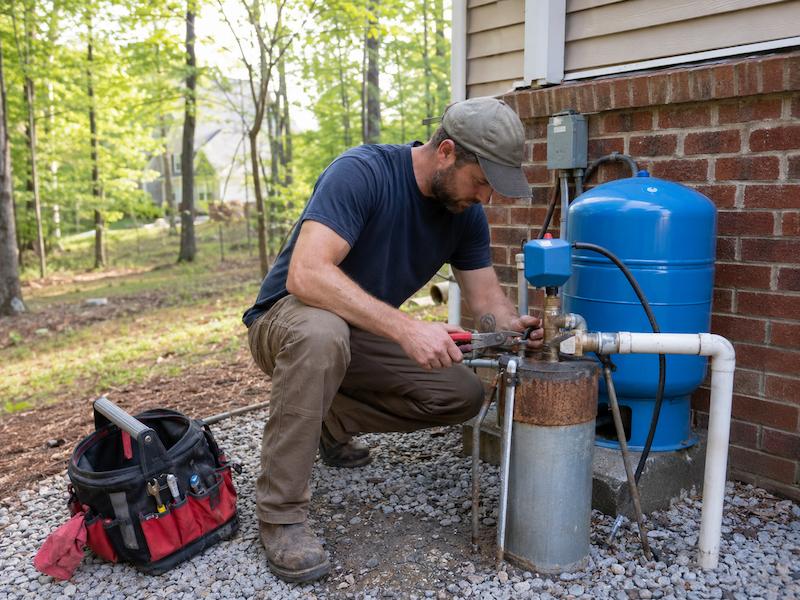
Unlike municipal water, a private well system is the homeowner’s responsibility. You don’t need to constantly service the pump, but you should know what normal pressure and operation feel like, inspect visible components, test well water at least once a year, and call a well pump repair company when something changes.
Table of Contents
How Do Raleigh-Area Conditions Affect Private Well Maintenance?
Homes in Raleigh and surrounding Triangle communities rely on groundwater conditions that can vary from property to property. Two wells a relatively short distance apart may have different depths, yields, mineral conditions, or treatment needs.
That is why changes from your own well's normal performance are often more useful than trying to compare it with a neighbor's system.
Heavy Rain and Flooding
After major storms, inspect the area around the wellhead. If floodwater reaches or submerges the well, treat that differently from an ordinary well pump maintenance service. Floodwater can carry bacteria, chemicals, sewage, and other contaminants into the well through the cap, casing, or surrounding ground. North Carolina’s Department of Health and Human Services (NCDHHS) recommends water testing after flooding before assuming the water is safe to use.
Water Quality Changes
Iron staining, sediment, low pH, unusual odors, or changes in the way your water looks do not automatically mean your well’s pump is failing. Groundwater quality varies naturally across North Carolina, so the first step is figuring out whether the problem is in the water or in the equipment.
Keeping past water-test results makes that easier so you can compare well water testing over time to determine whether something in the water supply has actually changed.
Extended Dry Weather and Lower Groundwater
Long stretches of hot, dry weather also affects private wells in the Triangle. If groundwater drops, a well may not recover as quickly while the household is using water. You might notice muddy water, changing pressure, air at the faucets, or unusual pump cycling. These are not automatic indicators you need a well pump replacement.
At A&T Well and Pump, our well contractors can check the pump and pressure system along with the well's available water supply before recommending if well pump repair or well pump replacement is the best option for your property.
What Does Well Pump Maintenance Include?
Well pump maintenance means keeping an eye on the entire system, not just the pump. The pressure tank, pressure switch, controls, water lines, and wellhead all affect how the system performs. Most homeowners should plan on an annual well inspection and call sooner if pressure, water quality, or pump cycling suddenly changes.
Check the Wellhead and Casing Annually
The visible wellhead should be inspected at least once a year, ensuring the cap is secure, and the casing is free of cracks or openings that could let surface water, insects, or debris enter.
Watch Water Pressure Throughout the Year
You don't need to check your home’s water pressure on a set schedule. Just pay attention to how it normally feels and take action when something changes. Weak or fluctuating water pressure can come from the pump, pressure tank, pressure switch, piping, filtration, or the well itself.
If the change continues, schedule a Raleigh well inspection rather than waiting for the system to stop working.
Pay Attention to Pump Cycling
Your water well pump should turn on and off as water is used. If it begins switching on and off every few seconds, your system is short cycling and should be checked promptly. A pressure tank problem, leaking line, or faulty pressure control can cause short cycling and put extra wear on the pump.
In some cases, well pressure tank repair may solve the problem without needing to a well pump replacement.
What Does a Professional Well Pump Inspection Look For?
A professional inspection goes beyond checking whether water comes out of the faucet. The well contractor is trying to determine how the pump and the components around it are working together.
The exact testing depends on the type of well, pump, pressure system, symptoms, and accessibility of the equipment.
Pump Operation and Cycling
Your Raleigh well technician can observe when the pump starts and stops, whether it reaches the expected system pressure, and whether it cycles normally.
A pump always running means it's compensating for a leak, or has a pressure-control problem or damaged component.

Pressure Tank Controls
If a tank becomes waterlogged or loses its proper air charge, the pump may cycle far more often than it should.
The pressure switch, pressure gauge, tank, and associated fittings can be checked together rather than replacing parts based on symptoms alone.

Electrical Components
Well pumps rely on electrical controls, wiring, switches, and, depending on the system, control boxes or variable-frequency drives.
If you smell burned wiring or repeatedly trip the pump circuit, shut the system down and have it inspected by a professional well contractor.

Well Casing and Down-Well
Persistent sediment, suspected casing damage, unusual buildup, or other problems inside the well may call for a closer look.
A video well inspection offers close examination deep within the well and identifies the source of a problem.

When Does a Well Pump Need Repair vs. Replacement?
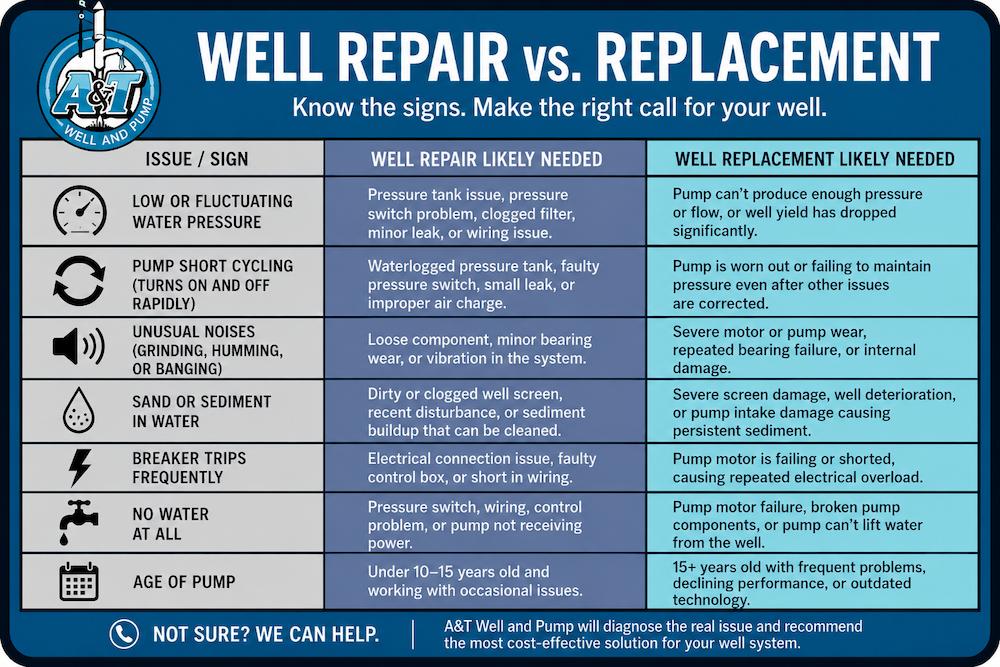
Not every low-pressure or no-water problem means you need a new water well pump. A well contractor should first check the pressure tank, switch, controls, wiring, and other system components to find the actual cause.
Well Pump Repair vs Well Pump Replacement
Repair may be enough when the problem involves a replaceable component, such as a pressure switch, pressure tank, wiring, control, or leaking fitting. Replacement is more likely when the pump motor has failed, the pump can no longer provide adequate pressure or flow, or recurring problems point to a worn-out pump.
A&T Well and Pump troubleshoots the system before recommending well pump replacement, so homeowners can avoid replacing equipment unnecessarily.
What Well Pump Maintenance Should You Avoid Doing Yourself?
There is a useful line between observing your well system and taking it apart. Homeowners can check for leaks, listen for unusual cycling, inspect the wellhead, keep maintenance records, and arrange water testing.
Electrical work, down-well pump work, and pressure-system repairs should only be performed by trained well pump contractors.

Don't Keep Resetting a Tripped Breaker
A breaker that trips once could have several causes. If it keeps tripping, something in the pump or electrical system needs attention.
Repeatedly resetting it can put more stress on damaged equipment. Shut the system down and have the electrical and pump components checked by a Raleigh well contractor at A&T Well and Pump.

Don't Open Electrical Controls Without Proper Training
Pressure switches and pump controls can contain live voltage. Removing covers or trying to clean or adjust electrical contacts is different from a simple visual inspection.
Leave electrical testing and repairs to someone qualified to service well pump equipment.

Don't Pull a Submersible Pump as a Maintenance Project
A submersible pump may sit far below ground and connect to drop pipe, electrical cable, and other equipment.
Pulling the pump requires the right equipment and a plan for protecting the open well. It should be removed when testing shows that down-well service is actually needed, not as routine yearly maintenance.
Well Pump Maintenance FAQs
How often should a well pump be serviced?
Have your well system checked about once a year. You should also call A&T Well and Pump for service sooner if you notice weak water pressure, the pump turning on and off more than usual, a tripped breaker, unusual noises, or no water at all.
Does low water pressure mean my well pump is going bad?
Not necessarily. Low water pressure can come from the pump, but it can also be caused by a pressure tank problem, clogged filter, faulty pressure switch, leaking pipe, restricted water line, or changes in the well itself. A licensed well contractor can test the system and find the actual cause before replacing equipment.
Should well water be tested after pump repair?
Yes, especially if the repair required opening the well or removing and replacing well components. NCDHHS recommends testing after flooding or anytime you notice a sudden change in the water’s taste, smell, or appearance.
Can I perform well pump maintenance myself?
There are a few things homeowners can safely keep an eye on like checking the well cap, looking for visible leaks, paying attention to changes in water pressure, and listening for unusual pump cycling or noises.
Electrical repairs, pressure-system repairs, and pulling a submersible pump should be left to a qualified Raleigh well repair and replacement company.
When should I repair my well pump instead of replacing it?
Well pump repair is often the better option when the problem comes from a pressure switch, pressure tank, wiring, control, or another replaceable part rather than the pump itself.
Well pump replacement may make more sense when the pump motor has failed, the pump can no longer provide enough water or pressure, or the system has developed repeated problems. A proper diagnosis should come before any recommendation to replace the pump.
Schedule a Well Pump Service in Raleigh with A&T Well and Pump
If you've noticed changing water pressure, rapid pump cycling, unusual sounds, sediment, recurring breaker trips, or another change in how your well operates, A&T Well and Pump can inspect the pump and surrounding components to find the source.
For an unexpected loss of water, our 24/7 emergency well pump repair service is available throughout Raleigh and the surrounding Triangle area.
Call us today to set up an inspection or service at (919) 980-0981 or thorough our online contact form.